Learning Reiki: Cultivating a Community of Care

Many people begin learning Reiki because they want to help others.
They want to support a loved one, offer comfort, or learn a practice that can bring greater wellbeing into someone’s life. But what if Reiki invites us to understand care more broadly? What if learning to support others also asks us to learn how to support ourselves? And what if, beyond self-care or caring for another person, Reiki offers a way of cultivating care at a deeper and broader level, within ourselves, in our relationships, and in the communities we share?
Perhaps Reiki is not simply something we practice on ourselves or for others. Perhaps it is a practice of creating a culture of care.
Care Begins with Presence
Care begins with noticing.
Before we can respond to ourselves or another person, we need to be present enough to notice what is happening. Presence asks us to slow down, listen, and become aware of what is here without immediately trying to change it. This is one of the foundations of Reiki practice. When we place our hands on the body, we practice attention. We learn to stay with sensation, breath, movement, stillness, and whatever arises without needing to force an outcome.
Over time, this quality of presence can enter everyday life. We might pause before reacting, take a conscious breath during a difficult conversation, listen more fully, or notice when we are rushing.
The question becomes not only: How do I practice Reiki?
but also: How am I practicing presence in the way I live? What Is Being Transformed?
This raises a deeper question: What is being transformed through our practice?
Is it simply our ability to perform Reiki techniques? Or is something deeper taking place?
Through sincere practice, perhaps it is our way of meeting ourselves, others, and life that gradually begins to change. We become more aware of our reactions. We develop greater steadiness and sensitivity. We learn to listen without immediately trying to fix. The practice becomes less about acquiring something and more about cultivating a way of being.
And from this cultivation comes another important capacity: how we respond.
Reaction is often automatic. Something happens, and we respond from habit, fear, irritation, urgency, or the desire to control.
Presence gives us a moment of space. In that space, we can notice:
What is happening in me? What is happening between us? What is actually needed here? Can I respond rather than simply react?
This does not mean that we will always respond perfectly. It means that we are cultivating the capacity to pause long enough to meet what is arising with greater awareness.
The Reiki Precepts can be understood as practical training in this way of meeting life. They invite us to return to the present, notice our automatic reactions, cultivate gratitude, practice kindness, and meet ourselves and others with greater compassion.
Presence gives us space to respond.Compassion shapes the quality of our response.Kindness gives that care expression.
Compassion allows us to recognize that we all experience difficulty, uncertainty, vulnerability, and change. Kindness gives compassion a human expression. And response is where these qualities become lived.
Sometimes the appropriate response may be touch.
Sometimes silence.
Sometimes listening.
Sometimes a clear boundary.
Sometimes stepping back and allowing another person to have their own experience.
Care does not always look the same.
Kindness does not always mean softness. Sometimes kindness is honesty. Sometimes it is saying no. Sometimes it is respecting a boundary or simply not trying to take away another person's discomfort.
What matters is the quality of presence from which we respond.
In this way, compassion and kindness become more than qualities we try to offer others. They become ways of being.
It is easy to create a division between self-care and caring for others:
First I take care of myself. Then I can take care of someone else. But perhaps the relationship is more fluid than that.
Supporting ourselves is part of supporting others, just as supporting others is part of supporting ourselves.
When we learn to listen to ourselves, we develop a greater capacity to listen to another person. When we practice compassion toward ourselves, we may become more capable of meeting another person with compassion. When we recognize and respect our own boundaries, we become better able to respect the boundaries of others. And when we support another person with presence, without needing to fix or control their experience, we deepen our own understanding of care.
Care is relational. It moves between us.
When someone is suffering, our natural impulse may be to make it better. We may want to offer advice, find an answer, or take away the discomfort. But care does not always mean making something go away. Sometimes it means being present with what is here:
We can listen without immediately trying to fix.
We can offer support without taking responsibility for another person's process.
We can respect another person's autonomy without pretending to know what they need.
The practitioner does not need to make healing happen.
The practitioner can learn to be present with another person's experience.
This is a profound form of care.
Hands-on Reiki offers a beautiful way to explore this. The hands do not have to become instruments for delivering something. They can become a way of listening. We can place the hands and notice. Feel without searching. Remain attentive without forcing. Allow the practice to unfold without deciding in advance what should happen.
The quality of touch is shaped by the quality of presence behind it.
As practice deepens, the hands can become an expression of what we are cultivating:
steadiness, attention, sensitivity, compassion, kindness, and presence.
The Reiki Precepts provide a practical framework for cultivating this way of being.
They ask us to return, to notice, to soften automatic reactions, to cultivate gratitude, to practice kindness, and to meet life with sincerity.
They are more than words to memorize. They can become an ongoing training in presence, emotional awareness, compassion, ethical embodiment, and relationship.
The question is not only: What am I experiencing?
but also: How am I meeting what I am experiencing?
And ultimately: How am I responding?
This is where Reiki practice enters everyday life.
As these qualities become embodied, they begin to influence our relationships.
We may listen differently. Speak differently. Set boundaries differently. Respond differently. We may become less interested in having the right answer and more interested in being genuinely present. We can care without abandoning ourselves. We can support without taking over. We can remain connected without becoming responsible for another person's experience.
When these ways of relating are practiced together, they begin to shape the communities we share. A culture of care grows through small, repeated acts:
Listening.
Respecting.
Including.
Encouraging.
Offering support.
Receiving support.
Speaking honestly.
Honoring boundaries.
Making space.
Returning when we lose our way.
Perhaps this is where Reiki opens into something larger than individual practice.
We often speak about Reiki as self-care. And self-care matters. But care does not have to stop with the individual. It can move from: self → relationship → community → culture.
When people cultivate presence, compassion, kindness, and thoughtful response, these qualities can begin to influence the spaces they share. A family can become more caring. A friendship more supportive. A classroom more respectful. A workplace more humane. A Reiki community can become a circle of care.
The question becomes not simply: How can Reiki help me?
or: How can Reiki help someone else?
but: How can the qualities I cultivate through Reiki contribute to the way we care for one another?
This moves Reiki beyond something we simply do and toward something we embody.
Care for Ourselves. Care for Others. Care for the World.
Perhaps Reiki begins very simply:
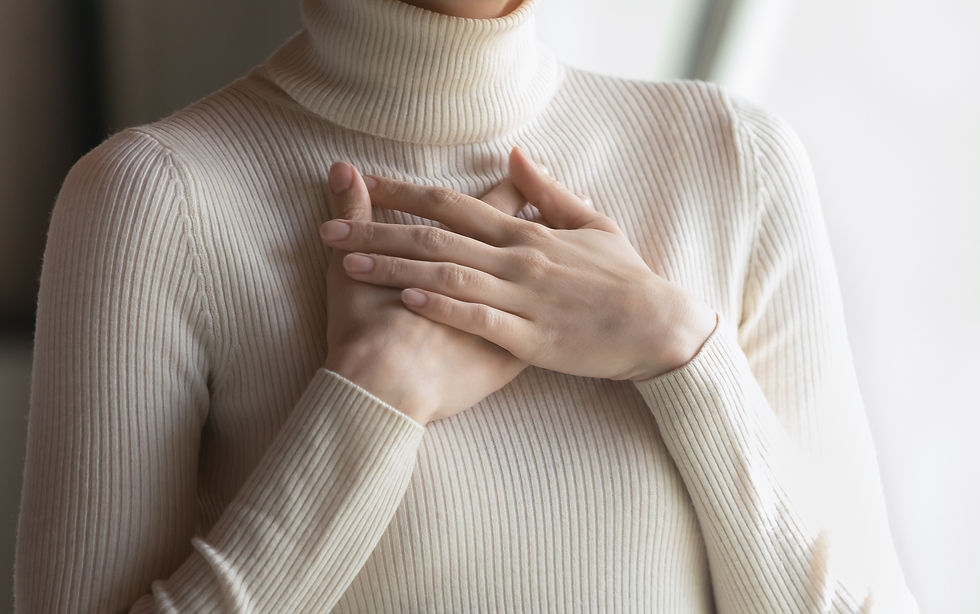
Two hands resting on the body.
A breath.
A moment of stillness.
A return to the present.
From these small acts of practice, something larger can unfold:
We learn to care for ourselves.
We learn to listen without fixing.
We cultivate compassion and kindness.
We learn to pause before reacting and respond with greater awareness.
And gradually, care becomes less something we occasionally do and more something we cultivate in the way we live.
Perhaps this is one of Reiki's deepest invitations: to become the kind of presence we hope to bring into the world.
Not perfect.
Not always calm.
Not always knowing what to do.
But willing to return.
Willing to listen.
Willing to respond.
Willing to care.
Care for oursleves and care for others .Care for the World.
Reiki may begin with two hands resting on the body. But it can become something much larger: a culture of care.
Reflection offered by Veronique Frede, Reiki Teacher, Moonstone Sanctuary, Chicago.



Comments